

Do you feel embarrassed or uncomfortable because of missing teeth? Finding a solution is a top priority so you can look and feel better again when you smile. While doing your research, you have most likely come across dental implants and dentures as solutions to tooth loss.
Dental implants are permanent restorations, so they last much longer than removable dentures do. They have a natural look and feel that dentures can’t match, making them better alternatives as teeth replacements.
In addition, these artificial tooth roots help preserve the jawbone after tooth loss. And because they’re attached to the jaw, they stay in place and don’t have the slipping issues that false teeth are prone to.
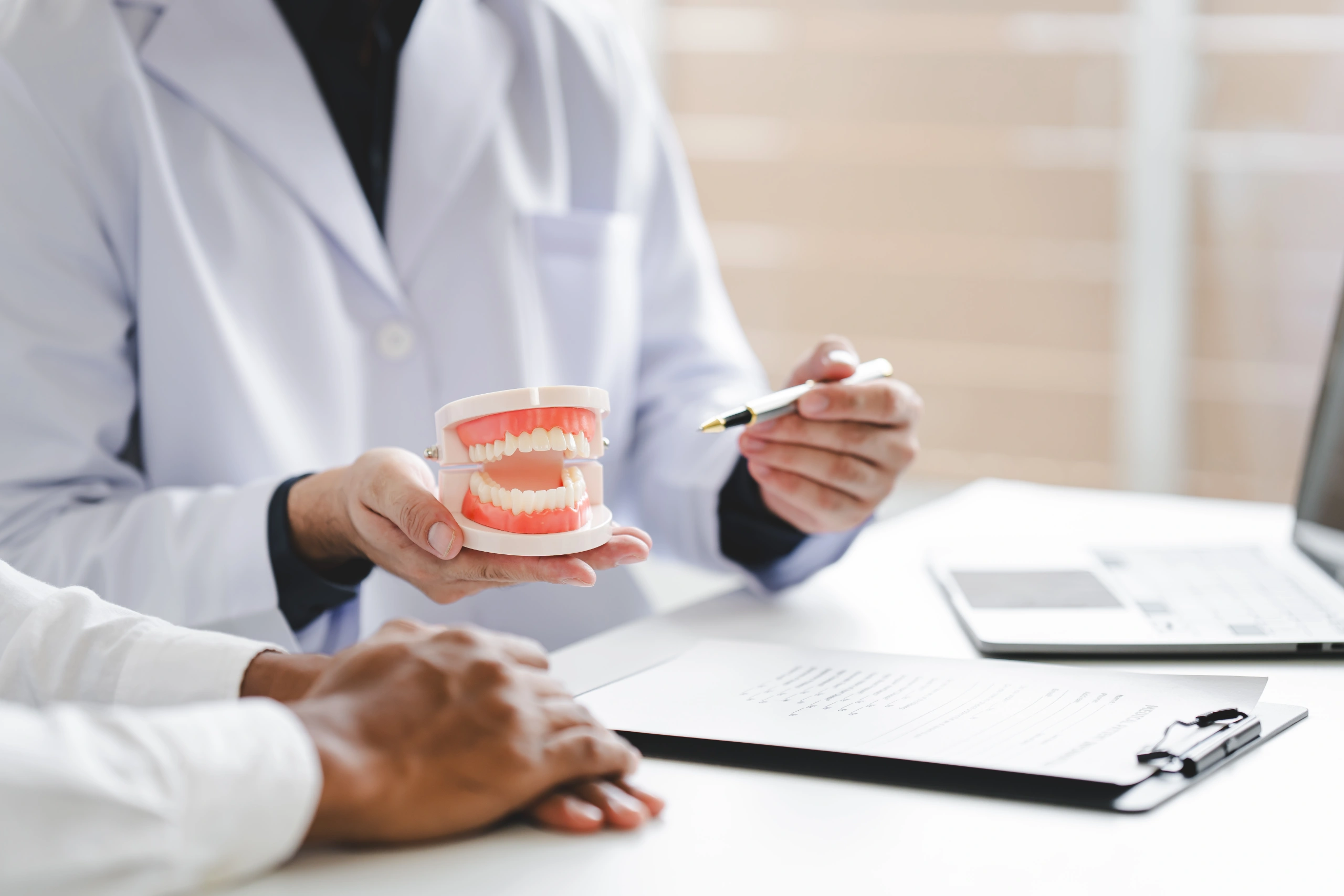
On the other hand, dentures are more economical than implants. The overall cost of treatment is considerably lower for this option. Plus it doesn’t involve surgery and the subsequent recovery period after the procedure. You can also restore your smile faster with dentures than with dental implants.
To better appreciate the value of a dental implant, let’s look at the factors that make them superior to removable false teeth.
Advantages of implants over dentures
- Better stability
The tooth roots are attached directly to the jawbone, resulting in a strong base for the restoration. With this treatment, you’ll be confident that your artificial teeth won’t budge when you’re eating or talking.
- Comfortable use
Since they don’t move, teeth replacements secured with an implant are more comfortable to use. Unlike conventional false teeth, they don’t rub against the gums and inner cheek, causing painful sores.
- Improved function
Chewing on food becomes much easier with the help of implants that are anchored in place. The treatment also enables you to speak more clearly. This is a huge improvement from speech issues resulting from denture use.
- Superior aesthetics
Tooth restorations that are permanently attached to the jaw look more natural than dentures. You’ll be more confident that your smile looks great and won’t accidentally slip out of place.
- Preserving the jawbone
An implant replaces the root attached to a lost tooth. It continues to stimulate the jawbone long after the loss of natural teeth, ensuring that the bone doesn’t deteriorate over time. This means you can preserve the natural shape of your face after tooth loss and prevent jawbone thinning.
- Lasts longer than dentures
Dental implants deliver benefits that last longer than dentures. With good oral hygiene and professional care, they can work as natural-looking, stable teeth replacements for a lifetime.
While an implant treatment is generally considered better overall, there are some instances when dentures come out as the better options.
What makes dentures better than implants?
- Cost
Dentures are more affordable, making them better if you want to limit the cost of a missing teeth solution. Without surgery, anaesthesia and the titanium post that make the overall treatment cost go up, dentures can restore your smile in a way that’s more economical.
- Time
Getting dentures takes a shorter time compared to an implant treatment. They can replace lost teeth much faster without the healing period needed by implants, which typically takes months.
- Health concerns
An implant treatment isn’t suitable for some patients, including those who have severe jawbone deterioration and certain medical concerns. In such cases, dentures are better options to replace missing teeth.
Want to smile confidently after losing your teeth? Contact us now and discover how Dr. Uzman can restore your smile to one you can be proud of.
Check here to see the dental practices that Dr. Uzman visits in the Luton and Bedford area, to see which one is most accessible to your location.
Conclusion
Dental implants are generally considered the best solutions to missing teeth. Compared to removable dentures, an implant treatment offers more benefits with stable, long-lasting, better looking, and more comfortable results. They also preserve the jawbone by taking on the role of lost tooth roots. On the other hand, dentures are better if you want to restore your teeth in a way that’s more affordable, faster, and doesn’t involve surgery.