

For many of our patients in Luton and Bedford, the length of time it takes between an initial consultation and the final placement of the permanent dental implant can be a cause for concern. The prospect of a lengthy recovery phase can put many people off getting the help they need.
Fortunately, dental implant surgery itself does not take that long – only between 1 and 2 hours on average. However, from start to finish, the process can take between 3 and 9 months, depending on how long the bone takes to heal. If you need any additional procedures like a sinus lift or bone graft, this can lengthen the process even more.
It’s important to have all the facts to help you make an informed choice. We’ve put together this blog about how long you can expect your treatment to take.
How do dental implants work?
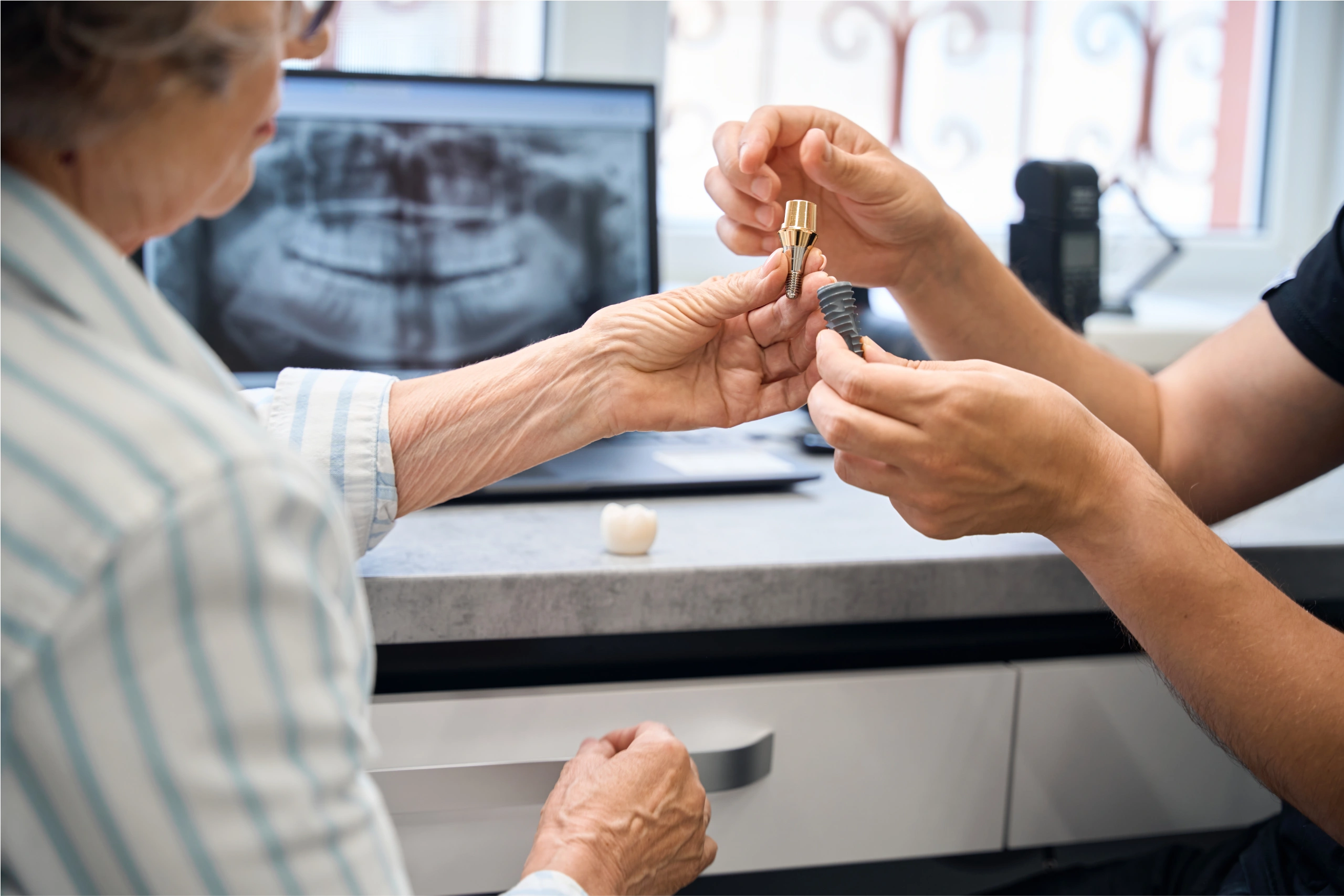
Dental implants are permanent tooth replacements designed to look and feel exactly like your natural teeth. Each dental implant has 4 components:
- The implant itself, a small titanium posts inserted into your jawbone
- The abutment for your crown (artificial tooth) will be placed on
- The screw attaching the implant to the abutment
- The crown, or artificial tooth, which is placed over the top
Dental implants are designed to mimic natural tooth roots, and provide better stability and durability compared with other tooth replacements such as dentures.
The dental implant process in Luton and Bedford
- Initial consultation and treatment planning
When you attend your consultation, Dr Uzman will examine your teeth and gums. After this we’ll put a treatment plan into place.
- Pre-implant procedures (if needed)
Before you have a dental implant, there are a few procedures which may need to take place. For example, these may include an extraction if part of your tooth is still in your jawbone, or bone grafting or augmentation if necessary.
If the remains of your old tooth are still in the socket, we will remove them to make room for the implant. This helps prepare your mouth for the implant, as well as helping to prevent infection or other complications. To allow for the healing process, we usually place the implant around 3 months after the extraction.
- Dental implant surgery
The surgical process for tooth implants is straightforward. Dr Uzman will place a small post, usually made of titanium, into your jawbone. However, if you have a history of allergies or simply don’t wish to have metal implants, we also offer zirconia implants.
- Healing and recovery
Following your implant surgery, Dr Uzman will place a temporary tooth so that you can smile, speak and eat with confidence while your implant heals. The immediate healing phase will take around 1-2 weeks.
Over the next few months, we’ll arrange regular checkups so we can monitor your progress and ensure everything is going well.
- Abutment and crown
Once the implant has fully fused with the bone (osseointegration), Dr Uzman will place an abutment, a small connector, on top of the implant – the dental crown will be placed on top of this.
Once it is placed, your gums will usually need another 1-2 weeks to heal before your new crown can be fitted. With proper care, this can last a lifetime.
Learn more about the dental implant process.
How long do dental implants take from start to finish?
Getting dental implants usually takes several months, although in some cases it may be possible to have same-day implants or implants which take a few weeks. The exact timeline will vary depending on your needs and complexity of the treatment. However, as a general rule:
Standard timeline – 3 to 9 months
If bone grafting is needed – 8 to 12 months
Immediate implants – Often the same day (or within a few weeks)
Aftercare
Once you’ve had a dental implant, it’s important to maintain your oral health by continuing to maintain a proper care routine. This will help minimise any stress and discomfort, and may even help you to heal faster.
- Eat a diet of soft foods in the first few days after surgery
- Do not brush or touch the implant site during the week after surgery – we will give you more detailed instructions during your appointment
- Avoid trauma to the implant site (for example, by playing sports)
- Avoid eating or drinking anything too hot or cold
- Keep a good oral hygiene routine by brushing and flossing your teeth regularly
- Avoid tobacco products and alcohol – these can slow the healing process
- Take antibiotics, pain relief and any other prescribed medication
- Attend dental checkups and hygiene appointments regularly to ensure everything is going well
A long-term investment
If you’re thinking about having dental implants, don’t be put off by the length of time it may take. Properly cared for, implants can last for decades or longer. They are designed to be a fully functional replacement for your natural teeth, and help you avoid further problems down the line by protecting the bones, teeth and gums around them.