


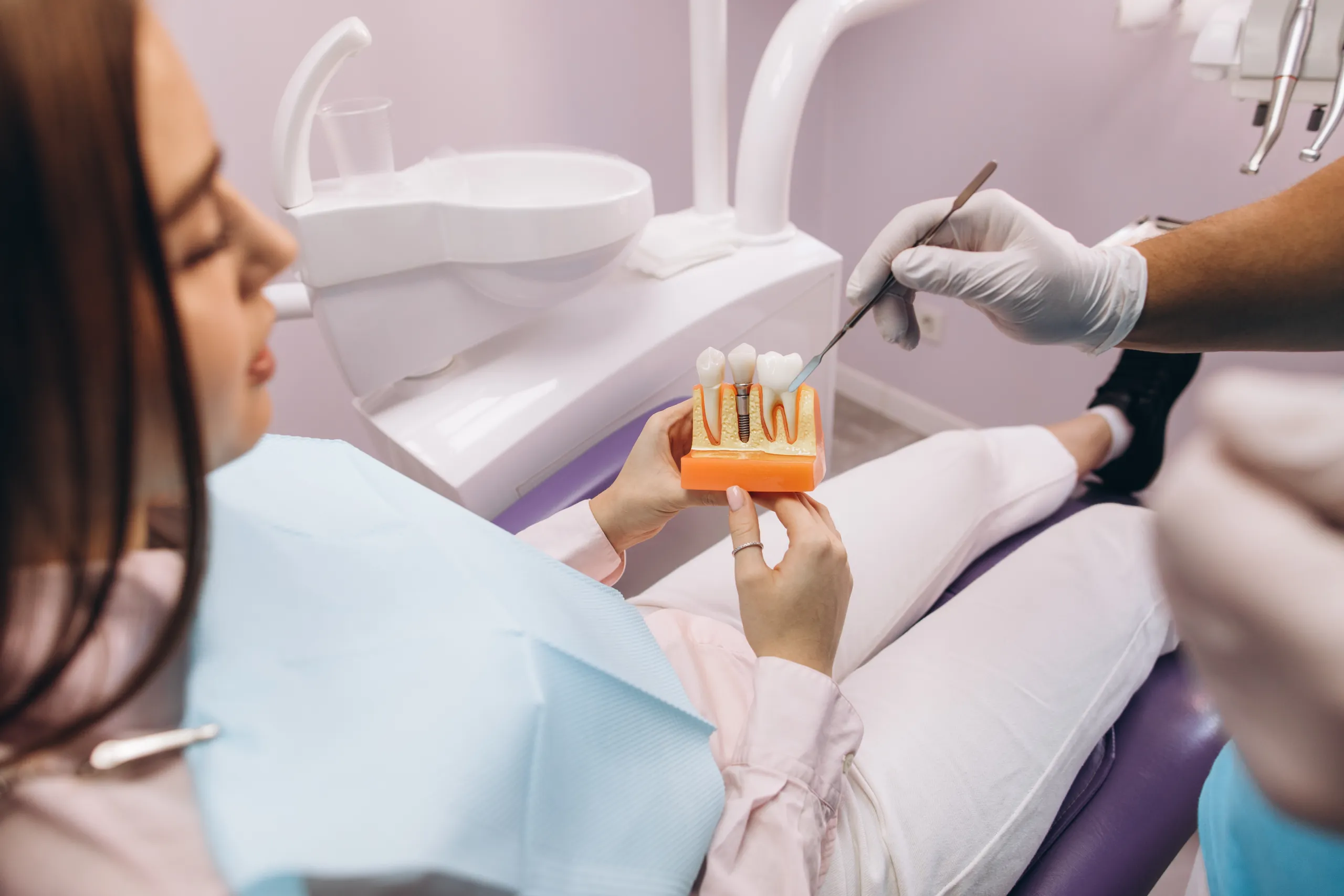
Considering dental implants but worried about what to expect? You’re not alone. Many patients want to know the challenges before committing to the treatment. Here’s an honest look at the worst part of dental implants.
Most patients encounter problems with dental implants after the surgery. More specifically, it’s the time immediately after the implant placement, when you can expect mild discomfort and swelling for 48-72 hours as the surgical site heals.
Another aspect that patients don’t look forward to is the months-long wait for osseointegration. After the treatment, you’ll need to wait for a few months to let the implant fuse with the surrounding bone tissue before the dentist can attach a dental crown or bridge.
Dental implants solve missing teeth problems. They offer many benefits, but you may face some challenges during the treatment process.
Challenges you may face after the treatment
- Discomfort
The surgery itself won’t be painful because your dentist will use anaesthesia to numb the site. However, you’ll need to prepare for some swelling, a bruised feeling, and tenderness for the next 48–72 hours immediately after the procedure.
- Healing issues
There is a risk of infection during healing, though this is uncommon with proper care. This can be minimised by close monitoring of the surgical site, through at-home care and regular dental check-ups. Watch for signs of delayed healing, and be sure to call us on 01257733633 if you have any concerns at all.
- Dietary restrictions
After the surgery, you’ll need to stick to soft food items while the gums heal. This can be quite challenging, especially if you’re not used to such foods or follow a specific diet for medical or personal reasons.
- Longer healing time
The artificial tooth root needs a few months to integrate with the jawbone. Typically, it will take 4 to 8 months from the time of the surgery to the placement of the final crown or bridge.
- Success rate
While rare, dental implants can occasionally fail to integrate with the jawbone. This risk increases if there’s bone deterioration, and for people who smoke.
- Cost of dental implants
Dental implants are a significant investment, but many patients find the long-term benefits worth the cost. Aside from the implant, the total also includes the final crown, and other procedures such as a bone graft if required. Cost varies from one practice to another because of the clinic’s location, case complexity, and dentist’s expertise.
Dr. Uzman’s team will provide a comprehensive report detailing the exact cost of each item to be used. This can help you with planning the financial aspect of your treatment.
Don’t be discouraged with the disadvantages of dental implants because they’re temporary and can be managed with proper care. The treatment’s merits still outweigh the challenges. Are you ready to experience these benefits while solving your missing teeth? Contact us now to learn more.
Dr. Uzman currently visits practices in the Luton and Bedford areas. We encourage you to check which one is nearest to your place so you’ll find it convenient to get dental implants.
Conclusion
A dental implant restores your smile after tooth loss and offers long-lasting benefits. The period after surgery can be challenging, though, because of discomfort and dietary restrictions. Other issues that you could encounter include delayed healing, the rare risk of the artificial root failing, high costs, and a long waiting time as the implants heal. However, these challenges are temporary and manageable. Also, they’re definitely worth it for all the long-term benefits that you’ll get to experience with dental implants.